Dark Mold in a Louisville Home: How Black Mold Removal Works
Black spots on a basement wall or a bathroom ceiling look alarming. The color tells you less than you might think. What matters is how much there is, what it is growing on, and why that surface stayed wet.
Black mold removal typically costs $800–$7,000, according to both Fixr and Bob Vila, depending on the area involved. Color alone doesn't show which species you have or how risky it is. Any indoor growth is removed the same way: contain it, take out or clean what grew mold, and fix the moisture.
What "black mold" does and doesn't mean
Many molds are dark green, gray or black, including common species that grow on shower grout and window frames. The one people usually mean, Stachybotrys, needs material that stays wet for a long time, such as drywall paper or wood after a leak. Seeing it is a sign of a long-running water problem more than a reason to panic. If someone at home has asthma, allergies or a fragile immune system, raise it with their physician.
Where it turns up in Louisville houses
- Basement walls and joists after spring seepage or a storm backup.
- Behind finished basement paneling, where a wet wall can't dry.
- Bathroom ceilings in older homes with no exhaust fan or one that vents into the attic.
- Under sinks and around old drain lines, where a slow drip runs for months.
- Exterior-wall closets that stay cool and damp in muggy weather.
About 61% of Louisville homes were built before 1980 (U.S. Census), so aging plumbing and foundations are often part of the story.
How is black mold removal done?
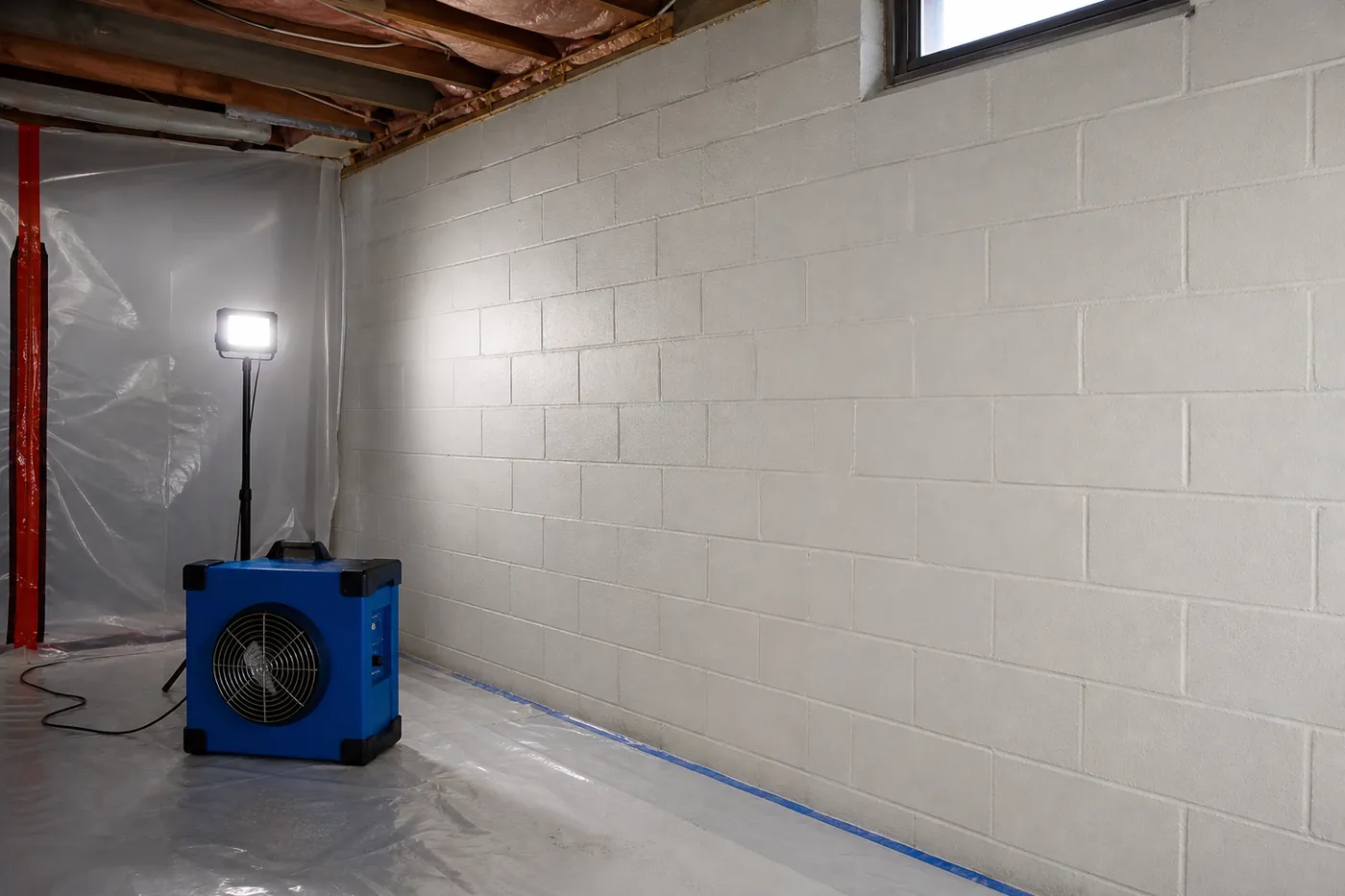
- Containment: plastic sheeting seals off the area, often with negative air pressure so spores don't drift through the house.
- Protection: workers wear respirators and protective clothing.
- Removal: porous materials such as drywall, insulation and carpet that grew mold are cut out and bagged. Wood and other hard surfaces are cleaned, often by sanding or scrubbing, and HEPA-vacuumed.
- Drying and the cause: the area is dried and the water source fixed before walls are closed up.
Those steps match the principles in Kentucky's 2010 mold law, which follows the IICRC S520 standard. Ask the company to describe each one in its written scope.
Is it a do-it-yourself job?
Under roughly 10 square feet, on tile, glass or sealed wood, a homeowner can usually handle it: soapy water, a scrub brush, rubber gloves, goggles and an N95 mask. Avoid mixing cleaners, and skip bleach on porous material, where it whitens the stain without removing the growth. Anything larger, anything inside a wall, and any patch that keeps returning needs a professional. Compare what you are offered with the mold remediation price ranges for that kind of area.
Questions homeowners ask
Is a lab ID of the species worth paying for?
Usually not. Removal is the same whatever the species, so a lab name rarely changes the plan. Testing is more useful for a hidden smell, a real estate deal or confirming that a large job is finished.
Tell us where the mold is
Tick the option nearest your situation, then mention the room and whether it has been wet lately. A Louisville mold specialist rings you to discuss it.